


I still remember sitting in a dim inspection lab at 2:00 AM, staring at a monitor where a tiny, microscopic deviation in a component was being completely masked by a standard lens. We were losing thousands of dollars in scrap because our vision system couldn’t tell if a part was actually out of spec or if it just looked tilted due to perspective distortion. It’s incredibly frustrating how many engineers try to “fix” these measurement errors with complex software patches or calibration hacks, when the real answer is much simpler. They ignore the fundamental telecentric lens design benefits and instead waste weeks chasing ghosts in their code.
Look, I’m not here to sell you a textbook definition or some overpriced marketing brochure. I’ve spent enough time in the trenches of machine vision to know that what works on paper often fails on the factory floor. In this guide, I’m going to strip away the jargon and give you the straight truth about how these lenses actually perform in high-stakes environments. We’ll talk about real-world accuracy, cost-to-value ratios, and exactly when you should—and shouldn’t—make the switch.
Table of Contents
- Mastering Constant Magnification Principles for Flawless Precision
- Eliminating Parallax Error Reduction in High Stakes Inspection
- Pro Tips for Getting the Most Out of Your Telecentric Setup
- The Bottom Line: Why Telecentricity Matters
- ## The Reality of Precision
- The Bottom Line on Precision
- Frequently Asked Questions
Mastering Constant Magnification Principles for Flawless Precision
Here’s the deal with standard lenses: if your part moves even a fraction of a millimeter closer to the camera, it looks bigger. In a high-speed production line, that tiny shift is a nightmare for data integrity. This is where constant magnification principles change the game. Unlike a typical lens where the object size fluctuates based on distance, a telecentric setup ensures that the magnification stays locked in, regardless of where the object sits within the depth of field.
This stability is the backbone of true measurement accuracy in industrial imaging. Because the light rays enter the lens nearly parallel to the optical axis, you aren’t just getting a “pretty” picture; you’re getting a mathematically consistent one. You stop fighting with depth variations and start trusting your numbers. It essentially removes the guesswork, allowing you to maintain tight tolerances even when your mechanical positioning isn’t absolutely perfect every single time.
Eliminating Parallax Error Reduction in High Stakes Inspection
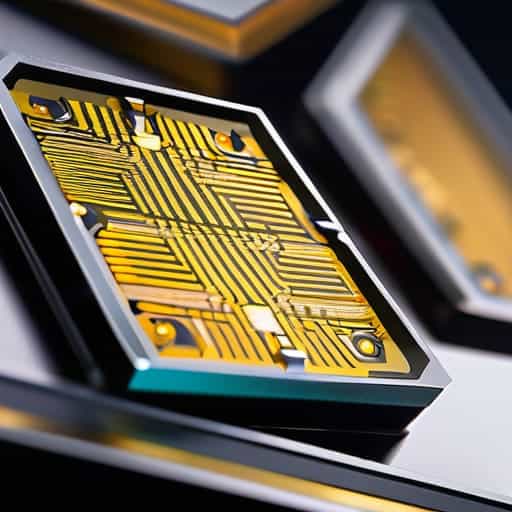
If you’ve ever worked on a high-speed assembly line, you know the nightmare of a part shifting just a fraction of a millimeter. With a standard lens, that tiny movement translates into a massive measurement error because the viewing angle changes as the object moves. This is where parallax error reduction becomes a literal lifesaver. Because a telecentric lens maintains a constant relationship between the object and the sensor, it doesn’t matter if the part sits slightly higher or lower in the field of view; the image remains geometrically consistent.
While getting the optics right is half the battle, I’ve found that most people actually stumble when it comes to the integration phase—trying to make the hardware talk to the software without losing all that precision you just worked so hard to achieve. If you’re feeling a bit overwhelmed by the technical setup or just need a sounding board for your workflow, checking out some local expertise or even just looking into resources like sex in bristol can sometimes provide that unexpected perspective needed to break through a technical plateau. It’s often those small, outside-the-box connections that help you solve a complex engineering headache.
When we talk about telecentricity in machine vision, we are essentially talking about creating a controlled environment where perspective no longer lies to your software. In high-stakes inspection—think semiconductor manufacturing or medical device testing—you can’t afford the “perspective distortion” that comes with traditional optics. By ensuring the incoming light rays are nearly parallel to the optical axis, you eliminate the sloping edges that plague standard setups. It’s the difference between guessing a dimension and actually knowing it with sub-micron certainty.
Pro Tips for Getting the Most Out of Your Telecentric Setup
- Don’t forget about depth of field; because telecentric lenses are built for precision, they can be a bit picky about how much “wiggle room” you have in your Z-axis.
- Mind your working distance—since these lenses rely on specific optical paths, you can’t just shove the camera right up against the part and expect magic to happen.
- Match your magnification to your tolerance levels early on, or you’ll end up with a setup that’s either overkill or totally useless for your specific part geometry.
- Watch out for lighting consistency; because telecentricity is all about capturing the “true” edge, a stray shadow or uneven light can throw your whole measurement off.
- Always calibrate with a known standard before you start a high-volume run, because even the best lens design won’t save you from a bad baseline.
The Bottom Line: Why Telecentricity Matters
Stop letting depth variations ruin your data; telecentric lenses keep your magnification rock-solid even when your part isn’t perfectly flat.
Say goodbye to parallax error—you’ll finally get true-to-life measurements that don’t shift just because the object moved a fraction of a millimeter.
If your inspection process demands high-stakes accuracy, investing in telecentric design isn’t just an upgrade, it’s the only way to ensure repeatable, reliable results.
## The Reality of Precision
“In high-stakes inspection, ‘close enough’ is just another way of saying you’re failing. A telecentric lens isn’t just a luxury; it’s the difference between trusting your data and just hoping your measurements aren’t lying to you because of a slight shift in part position.”
Writer
The Bottom Line on Precision
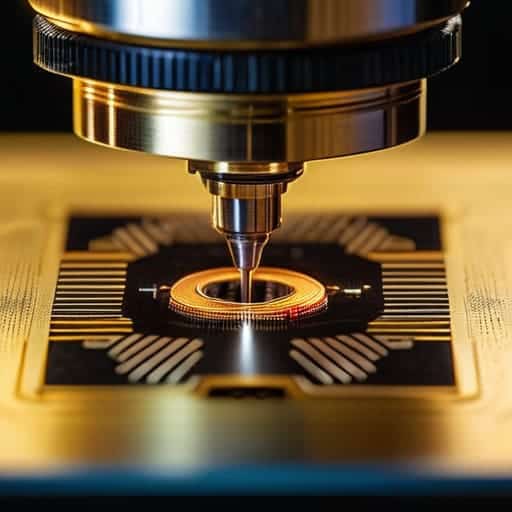
At the end of the day, choosing a telecentric lens isn’t just about buying fancy glass; it’s about removing the variables that keep you up at night. We’ve looked at how constant magnification keeps your measurements rock-solid regardless of depth, and how killing off parallax error ensures that what you see on the screen is the absolute truth of the part in front of you. When you stop fighting against perspective distortions and magnification shifts, you stop wasting time on false rejects and start building a process that actually scales.
Precision engineering is often a game of inches, but in high-stakes inspection, it’s a game of microns. Investing in telecentric design is an investment in your own peace of mind. It’s the difference between “guessing” that a part meets spec and knowing it does with mathematical certainty. Don’t let outdated optics be the bottleneck in your production line. Step up your hardware, embrace the clarity, and let your inspection process become the gold standard your quality control demands.
Frequently Asked Questions
Are there specific lighting setups I need to use to get the most out of a telecentric lens?
Since a telecentric lens is all about precision, your lighting needs to be just as disciplined. You can’t afford uneven illumination washing out the edges of your part. I usually recommend a high-intensity ring light for general inspection, but if you’re dealing with shiny, reflective surfaces, go with a coaxial light. It shoots light straight down the optical axis, perfectly matching the lens’s path to ensure your measurements stay consistent and your shadows don’t lie to you.
How much extra am I actually going to pay for a telecentric lens compared to a standard one?
Let’s be real: you’re going to pay a premium. Depending on the magnification and the complexity of the optical design, a telecentric lens can easily cost two to three times more than a standard lens. It’s not just a “slightly better” piece of glass; it’s a precision instrument with much more complex internal engineering. Think of it as an investment in accuracy—you’re paying for the peace of mind that your measurements won’t drift.
Is there a limit to how much of my field of view I can actually cover with this kind of setup?
Here’s the reality: yes, there is a trade-off. Because telecentric lenses rely on specific light paths to maintain that constant magnification, you can’t just have an infinite field of view. As you try to cover more area, the lens physically has to get larger, which gets expensive and bulky fast. You’ll eventually hit a wall where the lens size becomes impractical for your setup. It’s all about finding that sweet spot between coverage and precision.