



I once sliced my thumb open trying to impress a date with my culinary prowess. Spoiler: it didn’t work out. But that bloody mess taught me something far more valuable than a failed romantic endeavor—knowing your way around a knife is non-negotiable. Honestly, if you’ve ever found yourself awkwardly hacking away at an onion, hoping no one notices the uneven slices, you’re not alone. The kitchen is a battlefield, and the knife is your weapon of choice. But wielding it with the finesse of a seasoned chef? That’s where things get interesting.
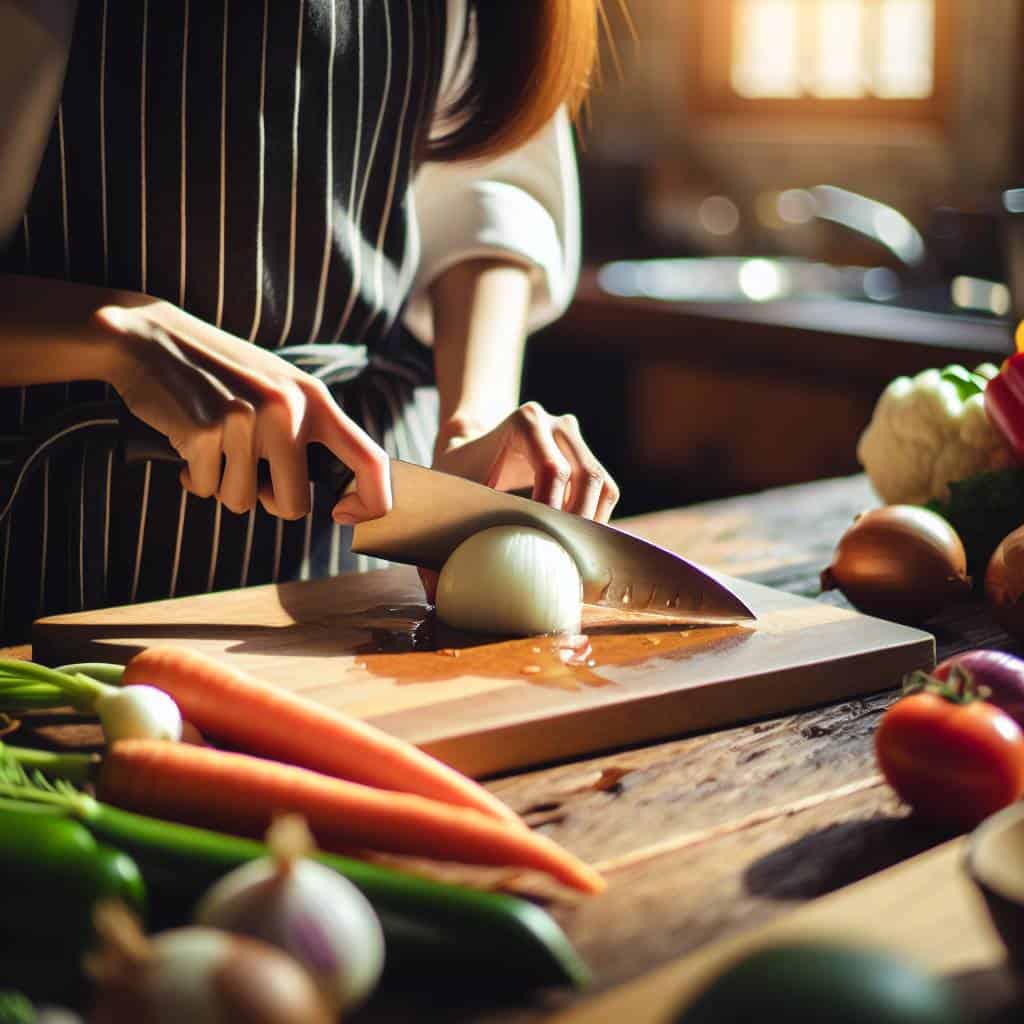
Here’s the deal: we’re diving into the nitty-gritty of knife skills, the kind you can’t afford to ignore. I’m talking about the basics—how to hold that blade, the cuts that matter, and yes, keeping all your fingers intact. We’ll slice through the jargon and get you dicing and mincing like you know what you’re doing. No fluff, no nonsense, just practical insights to keep you from turning dinner prep into a scene from a horror film. Ready to conquer the kitchen? Let’s get chopping.
Table of Contents
- Learning to Dance with Blades: My Journey into Basic Knife Sorcery
- The Art of Holding: When Grip Becomes Your Best Friend
- Slice, Dice, and Everything Nice: A Beginner’s Guide to Cuts
- Mastering the Blade: Knife Skills for the Rest of Us
- Knife Skills: The Art of Not Losing a Finger
- The Edge of Mastery
- Knife Talk: Cutting Through the Confusion
- The Sharp Edge of Growth
Learning to Dance with Blades: My Journey into Basic Knife Sorcery
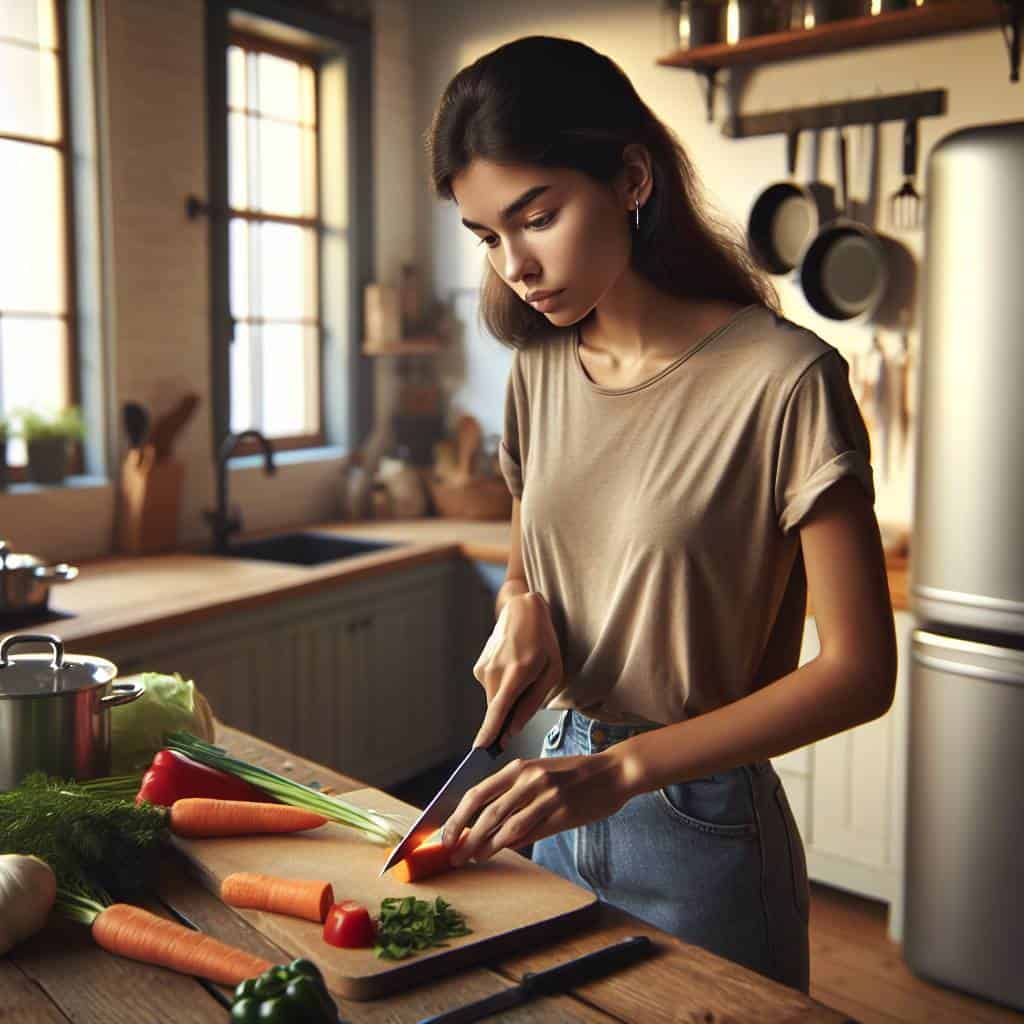
The first time I picked up a knife with intent, not just to butter toast but to really cut, I felt a shiver of potential up my spine. The kitchen, with its humming fridge and clattering pots, became my dojo. I was about to learn the delicate dance of blades. It’s not child’s play; it’s the art of survival and creation. Gripping that knife wasn’t just about not cutting my fingers off (though that was a priority). It was about wielding control—a firm handshake with the tool that could make or break a dish. The trick? Let the blade become an extension of your hand, slicing through onions and carrots with the precision of a surgeon, and the grace of a dancer.
I quickly realized that basic cuts weren’t so basic after all. Dicing, mincing, julienning—these weren’t just terms to impress at a dinner party. They were the building blocks of culinary alchemy. Each type of cut brought out different flavors and textures, transforming the mundane carrot into a star performer, all based on how you wielded your knife. And let’s not sugarcoat it—there were nicks and cuts along the way. There was blood, sweat, and maybe a tear or two when the onions were particularly vindictive. But with each slice, I found a rhythm. I embraced the awkwardness, the learning curve that seemed to mock my clumsy hands, until I could finally dance with blades—confident, unafraid, and eager for the next challenge.
The Art of Holding: When Grip Becomes Your Best Friend
Grip that knife like your life depends on it—because it might, especially if you’re as clumsy as I am. I learned early on that the way you hold a blade isn’t just about technique; it’s about survival. It’s the difference between slicing through a ripe tomato and accidentally carving your own thumb. The first time I picked up a chef’s knife, I held it gingerly, like it was a fragile relic. Turns out, that timid grip is a fast track to disaster. The moment you embrace the weight, feeling the steel become an extension of your arm, that’s when the real magic begins. There’s a kind of symbiosis that happens—a mutual trust between you and the blade. You cradle the handle with confidence, not fear, and suddenly you’re not just chopping; you’re orchestrating a symphony of movement and precision.
But let me be real: mastering the grip doesn’t happen overnight. It’s a dance of trial and error, a few knicks along the way—each one a lesson in humility and respect. I found myself practicing while making dinner, testing different holds, feeling the subtle shifts of control in my hand. It’s not just about keeping your fingers intact; it’s about empowering yourself to wield this tool with authority. When the grip finally clicks, it’s like unlocking a new level of existence. The knife becomes your ally, not an adversary. And in that moment, you’re not just a cook; you’re an artist. So, grip it like you mean it, and let the blade become your best friend.
So, you’re standing in your kitchen, knife in hand, ready to conquer the art of cutting without losing a finger. It’s a skill as necessary as knowing where to find good conversation in an unfamiliar city. Speaking of which, if you’re ever in Berlin and need a break from mastering the fine art of dicing onions, you might want to check out transen berlin. Just as a sharp knife can transform your cooking, connecting with interesting people can add a whole new flavor to your travels.
Slice, Dice, and Everything Nice: A Beginner’s Guide to Cuts
When I first picked up a knife with the intention of wielding it like a pro, I had no idea I’d be embarking on a journey that felt more like learning choreography than cooking. Each cut—slice, dice, julienne, chiffonade—has its own rhythm, a dance that demands precision and respect. I quickly realized that this wasn’t just about making food look pretty. It was about control, about understanding the blade and how it interacts with each ingredient. The slice is a gentle waltz, coaxing thin layers from a tomato without turning it into mush. The dice? More of a quickstep, turning a potato into uniform cubes with machine-like precision.
I remember the first time I tried a chiffonade. It was like wrestling a stubborn bull, those basil leaves slipping and sliding as if they had lives of their own. But once I got the hang of it, it was pure poetry—ribbons of green that transformed a simple dish into something extraordinary. The cuts aren’t just practical; they’re transformative. Each one is a step in the dance of cooking, turning raw, chaotic ingredients into a harmonious meal. So, grip that knife with confidence and let the blade lead you. It might just change how you see the world—or at least the contents of your fridge.
Mastering the Blade: Knife Skills for the Rest of Us
- Hold that knife like it’s a trusted ally, not a flimsy butter spreader—your grip is your first line of defense.
- Get comfortable with the basic cuts: the rock chop and slice are your bread and butter before diving into fancy stuff.
- Dicing isn’t just for looks—those uniform cubes cook evenly and speak volumes about your attention to detail.
- Mincing garlic shouldn’t be a battle; let your knife do the work with finesse, not force.
- Safety isn’t a buzzkill—it’s your ticket to keeping all ten fingers intact, so respect the blade.
Knife Skills: The Art of Not Losing a Finger
Forget about looking cool—it’s about holding the knife like you mean it. Your grip should be firm, not a death clutch, but enough to control the blade as if it’s an extension of your hand.
Dicing and mincing aren’t just fancy words for cutting stuff. They’re your ticket to even cooking. Uneven pieces are a rookie mistake that scream chaos on a plate.
Safety isn’t a boring checklist. It’s the difference between a meal well-prepared and a trip to the ER. Keep that blade sharp and your focus sharper.
The Edge of Mastery
Hold that knife like you’re shaking hands with an old friend—firm but forgiving. It’s the first step to transforming chaos into a symphony of cuts.
Knife Talk: Cutting Through the Confusion
How should I hold a knife to avoid losing a finger?
Grip it like a firm handshake, but with more caution. Your thumb and forefinger should pinch the blade at the base, while the rest of your fingers wrap around the handle. It’s about control, not brute force.
What’s the difference between dicing and mincing, and why should I care?
Dicing gives you uniformity, those neat little cubes that make a dish look pro. Mincing is for when you want flavors to melt into the background—tiny, almost invisible bits. Both are essential for nailing texture and taste.
What are the basic cuts every beginner should master?
Start with the rock-chop and the slice. The rock-chop is your go-to for herbs and garlic—blade never leaves the board. The slice is for bigger items, like onions and carrots. Master these, and you’re halfway to chef status.
The Sharp Edge of Growth
Mastering the basics of knife skills wasn’t just about not slicing off a finger, though I can’t say that wasn’t a motivator. It was about wielding control, feeling the weight of the blade as an extension of my hand, and daring to embrace the chaos of the kitchen. I learned that dicing an onion wasn’t a chore but a meditation, each cut precise and deliberate, like life’s unpredictable slices that teach us resilience.
In the end, the knife became more than just a tool—it was a companion on this culinary journey. Its handle worn smooth from countless hours of practice, its blade sharp and unforgiving, much like the lessons we face every day. And just as I learned to hold that knife with confidence, I found that life’s complexities can be tackled with the same grit. Because in both the kitchen and the world outside, it’s about more than just safety or efficiency. It’s about finding beauty in the basics, discovering the extraordinary in every cut and slice, and realizing that the simplest tools can craft the most profound transformations.