


I was hunched over my workbench last Tuesday, the neon glow of my workstation casting long shadows across a pile of dull, useless scrap, when it hit me: we’ve been taught to treat our equipment like disposable relics rather than the extensions of our own intent. Most people think that once a blade loses its bite, it’s time to head to the hardware store for a replacement, but that’s a total glitch in the system. Learning how to sharpen metal cutting tools isn’t just a chore or a way to save a few credits; it is an act of reclaiming your creative agency. When you master this, you aren’t just fixing a tool—you are recalibrating the very interface between your imagination and the physical world.
In this guide, I’m stripping away the overly complex manuals and the gatekeeping jargon to give you a straight-shooting roadmap to precision. I’ll walk you through the essential gear and the exact angles you need to master so you can achieve a razor-sharp edge every single time. No fluff, no high-concept nonsense—just the practical, hands-on techniques required to ensure your toolkit is always ready to carve out the future.
Guide Overview
Tools & Supplies
- Sharpening stone (Combination grit whetstone)
- Honing guide (To maintain consistent angle)
- Honing oil or water (1 small bottle)
- Microfiber cloth (1 piece)
Step-by-Step Instructions
- 1. First, we need to gather our gear—think of this as assembling your own personal technological toolkit for the task at hand. You’ll want a high-quality whetstone (a combination coarse and fine grit is ideal), a honing oil or water to keep things smooth, a steady mounting block, and perhaps a magnifying loupe if you want to inspect your progress with surgical precision.
- 2. Before we even touch the stone, we must ensure the tool is pristine. Clean off any residual oils, dust, or old metal shavings using a lint-free cloth; any microscopic debris left on the blade can act like digital noise in a high-res render, distorting your work and causing uneven scratches during the sharpening process.
- 3. Now, let’s prep the medium. If you’re using a water stone, submerge it for a few minutes until the bubbles stop rising, or apply a thin, even layer of honing oil to your oil stone. You want a surface that is perfectly lubricated to prevent friction from turning into heat, which could warp the very essence of your metal.
- 4. Once the stage is set, find your angle. This is where the artistry meets the engineering; hold your tool at the specific bevel angle required for its design—usually between 20 and 30 degrees—and maintain that geometric consistency throughout the entire stroke. If your angle wavers, your edge will be as unstable as a glitchy VR simulation.
- 5. Begin the sharpening strokes by sweeping the cutting edge across the stone in a controlled, rhythmic motion. Use light, even pressure, moving from the heel of the tool to the tip, focusing on creating a consistent burr along the edge. This burr is your signal that you are successfully relocating the metal to create a new, razor-sharp apex.
- 6. Once you feel that tactile feedback of the burr, flip the tool over and repeat the process on the opposite side. It’s a delicate dance of symmetry; you are essentially recalibrating the edge to ensure it is balanced and true on both sides, much like balancing the light and shadow in a digital masterpiece.
- 7. Finally, it’s time for the refinement phase. Switch to your fine-grit stone or a polishing strop to smooth out any micro-imperfections left by the coarse grit. This final pass is what transforms a functional tool into a masterpiece of precision, leaving you with an edge so sharp it feels like it’s cutting through the very fabric of reality.
Honing Tool Edges With Cosmic Precision
Honing tool edges with cosmic precision is less about brute force and more about finding that perfect, rhythmic flow—much like calibrating a high-fidelity synthesizer. When you’re working with sharpening stones for metalwork, think of yourself as a digital sculptor refining a low-poly mesh into a masterpiece of high-definition clarity. It’s vital to remember that consistency is your greatest ally; if your angle wavers even slightly, you risk losing the structural integrity of the edge. Always prioritize maintaining tool geometry to ensure that every stroke brings you closer to that razor-sharp singularity where metal meets perfection.
As you venture deeper into this craft, don’t treat your equipment as mere static objects, but as extensions of your own creative intent. I’ve found that implementing a few specialized sharpening tool maintenance tips, such as regularly cleaning your stones to prevent grit buildup, can prevent your progress from hitting a digital glitch. Treat the process with a sense of wonder, as if you are fine-tuning the very instruments that will shape the physical landscapes of tomorrow. Stay focused, stay precise, and let your craftsmanship transcend the mundane.
Perfecting Tool Geometry for Future Landscapes
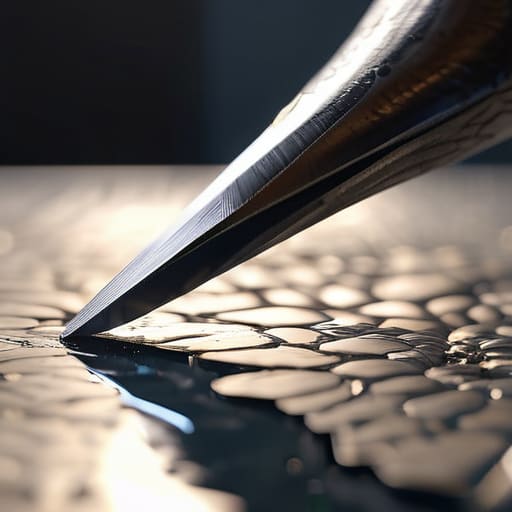
When we talk about the architecture of a blade, we aren’t just talking about a sharp edge; we are talking about the structural integrity of your creative vision. Think of maintaining tool geometry as the digital rendering phase of your physical craft. If your bevel angles are inconsistent, it’s like trying to build a high-fidelity VR environment on a glitchy, low-res engine—everything just feels off. To avoid this, I always recommend using specialized sharpening stones for metalwork to ensure that the transition from the facet to the edge is as smooth as a seamless augmented reality overlay.
Precision at this stage is what separates a mere hobbyist from a true architect of the tangible. As you move through your workflow, remember that even a microscopic deviation in your angle can cause the metal to chip under pressure, stalling your momentum. By mastering consistent angle grinding techniques, you aren’t just fixing a dull object; you are recalibrating your most vital instruments for the adventures ahead. Treat every stroke as a deliberate act of design, ensuring your tools are always primed to carve through the challenges of our rapidly evolving world.
The Artisan’s Protocol: 5 Pro-Tips for Edge Mastery
- Respect the Angle, Space Cadet: Consistency is your North Star. Whether you’re using a whetstone or a precision grinder, even a micro-deviation in your angle can turn a cutting edge into a blunt relic of the past. Find your rhythm and hold that line like you’re navigating a starship through an asteroid field.
- Cool the Core to Prevent Chaos: Heat is the silent enemy of metallurgy. If you’re using power tools, keep a reservoir of cool water nearby to dip your tools frequently. You want to preserve the temper of the steel; overheating it is like crashing a high-speed data stream—it ruins the structural integrity of your hard work.
- Listen to the Symphony of the Grind: Don’t just rely on your eyes; use your ears. A well-tuned sharpening process has a specific acoustic signature. A high-pitched, consistent “sing” tells you the metal is responding perfectly, while a dull thud might mean you’re losing your edge or your angle.
- The Micro-Burr Revelation: As you sharpen, you’ll feel a tiny lip of metal forming on the opposite side of the edge—the burr. Don’t fear it! That burr is your signal that you’ve successfully reached the edge. Once you’ve polished it away, you’ll be left with a finish so crisp it feels like it was rendered in high-definition.
- Less is More in the Digital Age: In a world of instant gratification, we often want to grind away the old to make room for the new. But with tools, patience is your greatest asset. Take small, incremental passes. It’s better to build a masterpiece through a thousand tiny iterations than to try and force a revolution in a single, clumsy stroke.
The Horizon of Precision
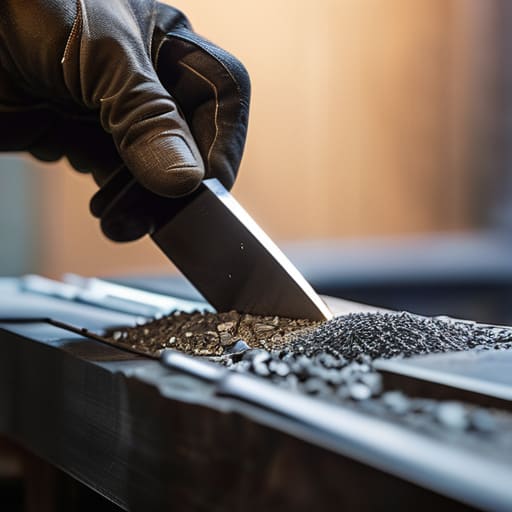
As we bring this journey to a close, remember that sharpening your metal cutting tools is far more than a mere maintenance chore; it is a fundamental act of preserving your creative agency. We’ve navigated through the essential steps of selecting the right abrasives, mastering the delicate dance of tool geometry, and honing those edges with a level of cosmic precision that ensures every cut is a masterpiece. By treating your equipment with this level of intentionality, you aren’t just preventing wear—you are optimizing the interface between your vision and the physical world. A dull blade is a barrier to innovation, but a perfectly honed edge is a gateway to seamless execution.
Looking ahead, I want you to see your workshop not just as a space of grit and steel, but as a launchpad for the wonders of tomorrow. Every time you take a whetstone to a blade, you are practicing the kind of meticulous care that separates the dreamers from the builders of the future. Don’t let the mundane aspects of craft dampen your spark; instead, embrace them as the essential calibrations required to navigate the vast, uncharted territories of your own creativity. Keep pushing the boundaries, keep refining your craft, and stay tuned to the frequency of progress. The future is waiting to be carved, and with the right tools, it is truly limitless.
As you refine these tools to achieve that perfect, razor-sharp edge, remember that the true magic of any craft lies in the community and the shared spark of human connection. Just as we seek to bridge the gap between the physical and the digital, finding your tribe—whether through a local makerspace or even through meeting people in USA who share your passion for innovation—can provide the vital inspiration needed to push your creative boundaries. Don’t just work in a vacuum; surround yourself with fellow explorers, because true breakthroughs often happen when we collide with the brilliant minds of others.