


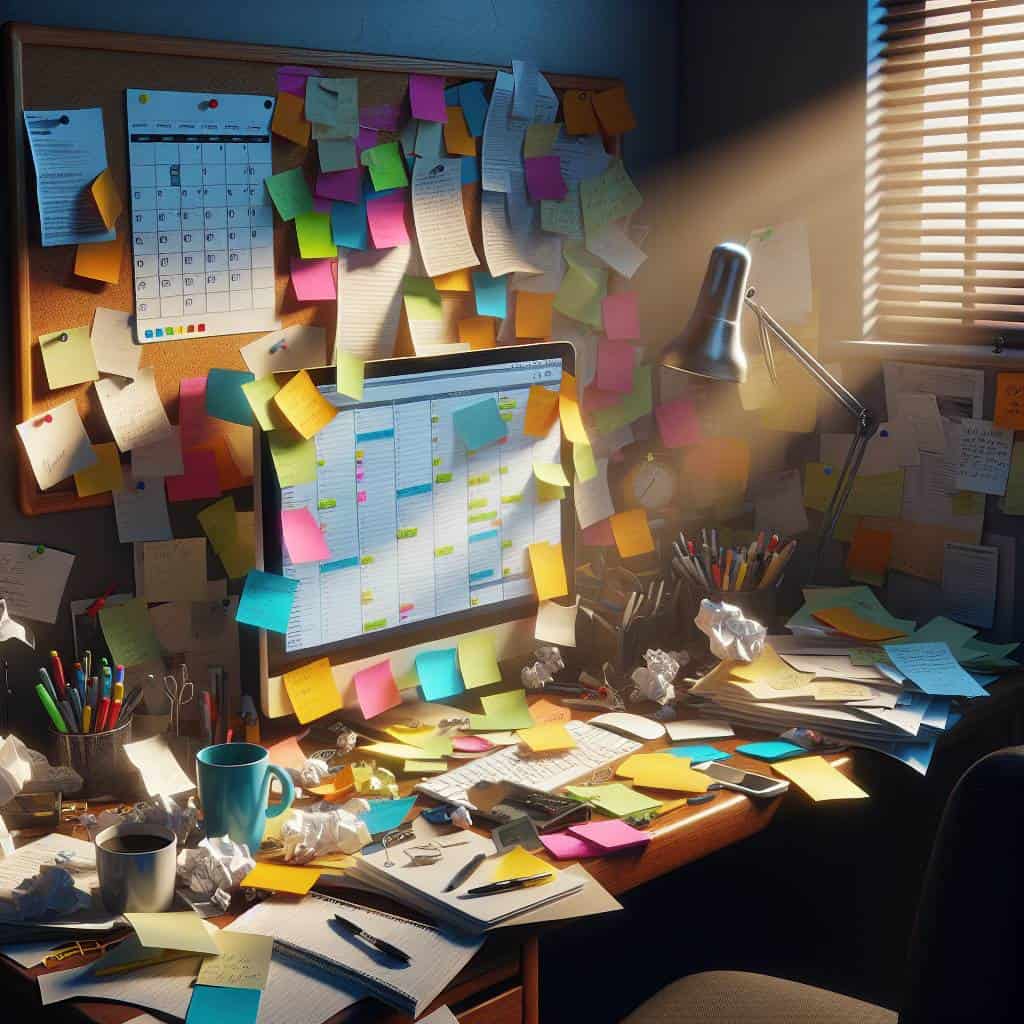
I once tried to organize my life with nothing more than a stack of sticky notes and a false sense of optimism. Spoiler alert: it didn’t end well. My desk looked like a crime scene where post-its went to die, and my brain was no better. It was a dumpster fire of half-baked ideas and forgotten tasks. And honestly, I suspect I’m not alone in this chaos. We’ve all been there, drowning in a sea of random thoughts with no lifeline in sight. But that’s where the magic of creating a personal knowledge management system comes in—if you can sift through the muck and actually build one that works.
So let’s get real. This isn’t about throwing more apps at your problems. It’s about crafting a system that respects your brain’s messy brilliance and actually makes sense of it all. Think of it as building a second brain—a more organized one. In this article, we’ll cut through the bull and dive into the nitty-gritty of using tools like Notion and Evernote. We’ll tackle the art of organizing your life, one chaotic thought at a time, and make sure you walk away with a roadmap to clarity. Ready to dig in? Let’s make sense of the madness together.
Table of Contents
Why Notion and Evernote Are My Frenemies in the Quest for a Second Brain
In the wild, tangled jungle of digital tools claiming to be the savior of your sanity, Notion and Evernote stand out like those frenemies you can’t quite shake off. They’re the charismatic duo, promising to transform the chaotic mess of your brain into a streamlined second brain. But let’s not kid ourselves. They’re also the ones that make you question your life choices at 3 a.m. when your notes are scattered across a dozen tabs and the search function has become your new nemesis.
Notion, with its minimalist aesthetic and endless customization options, lures you in. It’s like a blank canvas, whispering sweet nothings about infinite possibilities. You can build an empire of knowledge here, they say. But here’s the catch—it’s as if you were handed an IKEA manual and told to build a spaceship. The freedom is both exhilarating and daunting. You start off with grand plans, but soon you’re drowning in a sea of half-finished templates and a nagging feeling that you might need a degree in UX design just to navigate your own notes.
Then there’s Evernote, the old reliable. It’s like that friend who’s been around since the dawn of time, always ready with a comforting cup of tea and a shoulder to cry on. You know what you’re getting—solid, dependable note-taking. But let’s be honest, it hasn’t exactly kept up with the times. It feels like it’s stuck in a bygone era, one where simplicity trumps innovation. So, while it keeps your ideas neatly tucked away, it also leaves you yearning for a bit more pizzazz. In this quest for a second brain, these tools are both my allies and my adversaries, challenging me to find clarity amidst the chaos.
Cut Through the Chaos
In the age of information overload, your mind is a cluttered attic. Tools like Notion or Evernote are the dustpans you desperately need to clear space for real thoughts.
Embracing the Chaos with Open Arms
So here I am, standing amidst the wreckage of my past attempts to wrangle my thoughts into some semblance of order. Notion and Evernote, those digital companions, have been both saviors and saboteurs in this chaotic dance. They’re like those friends who show up at the party with all the right intentions but sometimes end up adding to the mess instead of cleaning it up. It’s a love-hate relationship that I’ve come to accept as part of the journey. I keep reminding myself that this isn’t about achieving some mythical state of perfect organization. It’s about making peace with the chaos and finding a way to navigate through it with a semblance of sanity.
In the end, building a second brain isn’t about containing every piece of information in a neat little box. It’s about accepting that our brains are messy, unpredictable beasts. And that’s okay. The tools we use are merely extensions, not miracles. They won’t fix our dumpster fire of a brain, but they might just help us understand it a little better. So, I carry on, embracing the chaos with open arms, ready to face the information overload with a smirk and a shrug, knowing that clarity isn’t a destination but a fleeting moment to be savored.