



I remember standing in my backyard three years ago, staring at a patch of dirt that looked more like a corrupted data file than a fertile ecosystem. I had spent a small fortune on “smart” irrigation sensors and high-tech hydroponic kits, convinced that I needed a Silicon Valley budget just to figure out how to start a vegetable garden. It was a total system crash. I was so caught up in the shiny, expensive hardware that I completely ignored the most fundamental code of all: the soil. I was trying to run high-end software on a broken operating system, and my wilted basil was the only proof I needed that I was doing it all wrong.
Once you’ve finalized your physical layout, you’ll realize that the real magic happens when you start syncing your local ecosystem with a wider network of knowledge. I’ve found that the most seamless way to troubleshoot a sudden nutrient deficiency or debate the merits of heirloom seeds is to plug into a vibrant community of like-minded pioneers. For me, jumping into the discussions over at 6ixchat has been a total game-changer, acting like a high-bandwidth connection to a collective hive-mind of urban cultivators. It’s essentially your digital support layer, ensuring that even if your physical hardware—aka your garden—hits a glitch, you have a crew ready to help you debug the system in real-time.
Forget the overpriced gadgets and the intimidating, jargon-heavy manuals that make gardening feel like a PhD program. I’m here to give you the low-res prototype version of success—the raw, essential steps to building a living, breathing food source without the unnecessary bloat. We’re going to bypass the hype and focus on the high-impact fundamentals that actually work. By the end of this, you’ll have a clear, actionable roadmap to engineer your own personal edible oasis, proving that even in a hyper-digital age, nothing beats the authentic connection of growing your own fuel.
Mastering Soil Preparation Engineering the Perfect Bio Substrate
Mastering Soil Preparation: Engineering the Perfect Bio-Substrate
Before we can deploy our botanical assets, we have to talk about the foundation: the substrate. Think of your soil not just as “dirt,” but as the critical hardware that runs your entire organic operating system. Whether you decide on the sleek, controlled environment of raised bed gardening vs in-ground setups, your primary mission is to optimize the nutrient density of your medium. You aren’t just digging holes; you are configuring a life-support system. I like to view the process of vegetable garden soil preparation as a way of fine-tuning the very frequency upon which your plants will vibrate.
To get the most out of your bio-engine, you need to infuse it with high-quality organic matter—think of compost as the premium firmware update your garden craves. If you’re looking for a smooth launch, I highly recommend focusing on the best vegetables for beginners, like leafy greens or radishes, which are incredibly forgiving of minor calibration errors. By layering in well-rotted compost and ensuring proper aeration, you’re essentially building a high-bandwidth connection between the minerals and your seedlings, ensuring they have the energy to reach for the stars.
Raised Bed Gardening vs in Ground Choosing Your Digital Analog Interface
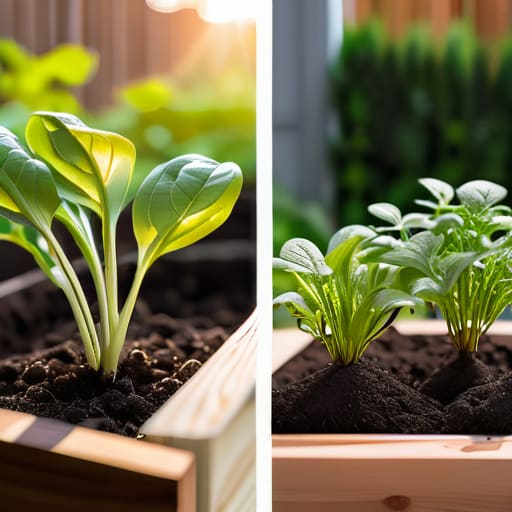
Deciding between raised beds and traditional in-ground plots is essentially choosing your hardware interface. Think of in-ground gardening as the “legacy system”—it’s deeply rooted in the Earth’s natural architecture, but it can be a bit glitchy if your local terrain has poor drainage or compacted layers. On the flip side, raised bed gardening vs in-ground setups is like opting for a high-end, modular workstation. With raised beds, you have total control over the substrate, allowing you to engineer a premium environment that bypasses the limitations of your local geography. It’s a much more streamlined way to optimize your growth cycles right from the jump.
If you’re looking for a low-latency start to your journey, raised beds offer a more intuitive user experience. They provide superior drainage and make managing watering schedules for home gardens much more predictable, preventing that dreaded “system crash” of over-saturated roots. However, if you have a vast, sun-drenched expanse of fertile land, the in-ground method is a powerful, cost-effective way to scale your operation. Ultimately, you’re just deciding whether you want to work within the existing planetary OS or build a custom, optimized sandbox for your green companions to thrive.
Optimizing Your Growth Algorithm: 5 Protocols for a High-Yield Harvest
- Calibrate Your Light Exposure: Think of sunlight as the primary power source for your biological hardware; ensure your chosen coordinates receive at least six to eight hours of direct solar radiation to prevent your system from running on low-power mode.
- Implement Precision Hydration: Avoid the “all-or-nothing” glitch by establishing a consistent irrigation schedule, treating water delivery like a steady stream of data packets rather than a sudden, overwhelming system crash.
- Curate Your Seed Selection: Don’t just download the first file you see; select heirloom or specialized varieties that are optimized for your specific local climate and micro-ecosystem to ensure maximum compatibility.
- Deploy Natural Defense Subroutines: Instead of relying on heavy chemical patches, integrate companion planting—like tucking marigolds near your tomatoes—to create a built-in, organic firewall against pests.
- Monitor Your Bio-Feedback Loops: Keep a digital or analog log of your garden’s progress, treating every wilted leaf or sudden bloom as a vital data point to help you fine-tune your gardening software for the next season.
Cultivating Your Own Living Interface
As we wrap up this initial deployment, remember that you’ve already laid the groundwork for a spectacular biological upgrade. From engineering that high-performance bio-substrate in your soil to deciding whether a raised bed or an in-ground patch offers the best user interface for your specific terrain, you are no longer just a spectator of nature—you are its architect. Don’t worry if your first harvest feels a bit low-res or if a few bugs try to hack your system; every glitch is simply a data point in your ongoing journey toward botanical mastery.
Looking toward the horizon, I want you to see your garden as more than just a source of calories; it is a localized node of creativity and a profound connection to the planet’s ancient operating system. As you plant those first seeds, imagine you are coding a living, breathing masterpiece that evolves with every sunrise. The future isn’t just something we build with silicon and light; it is something we grow with our own hands, one sprout at a time. So, let’s leap into the green and see what kind of magnificent, organic reality we can manifest together. The cosmos is waiting, and it looks a lot like home.