



I still remember the first time I got completely turned around in the belly of the city, standing under a flickering fluorescent light that hummed just loud enough to drive you crazy. I was sweating through my shirt, staring at a map that made absolutely zero sense, feeling that specific, hollow panic of being totally lost while thousands of people brushed past me without a second glance. Most people treat Subterranean Urban Navigation like it’s some high-tech puzzle meant to be solved with a GPS and a prayer, but let’s be real: those digital maps fail the second you hit a concrete dead end or a service corridor.
I’m not here to feed you some sanitized, textbook guide on how to read a transit schematic. Instead, I’m going to give you the raw, unvarnished truth about how to actually move through the city’s underbelly without losing your mind or your dignity. I’ll share the shortcuts the commuters use, the signs you should actually look for, and how to avoid the dead zones that turn a simple trip into a total nightmare.
Table of Contents
Mapping Underground Infrastructure Without Leaving a Trace
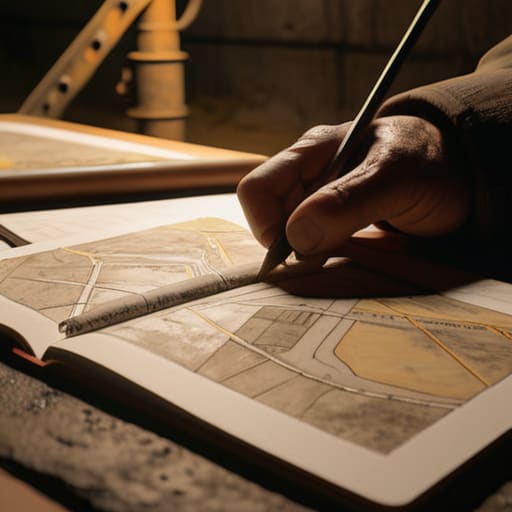
The biggest mistake rookies make is walking into a tunnel with a digital GPS and a flashlight, thinking they’re ready. The second you pull out a smartphone to log a waypoint, you’re potentially pinging a local cell tower or triggering a sensor. If you’re serious about mapping underground infrastructure, you have to go analog. I always carry a battered, waterproof notebook and a mechanical pencil. There’s no battery to die, and more importantly, no digital footprint left behind in the dark. You want to sketch out the junctions and pipe layouts by hand, noting the subtle shifts in utility tunnel topography that a sensor might miss.
Beyond just the drawing, you need to be mindful of how you move through these spaces. It’s not just about knowing where the walls are; it’s about knowing where the eyes are. To truly master the art of moving unseen, you have to practice bypassing urban surveillance by staying deep within the structural shadows. Avoid any areas where modern motion sensors or acoustic monitors might be tucked into the masonry. Keep your movements rhythmic and quiet, treating the silence of the tunnels as your most valuable tool.
Low Light Navigation Techniques for the Deep Dark

Once you drop below the street level, your eyes become your most valuable—and most unreliable—assets. The transition from city lights to total void is jarring, and if you rely solely on a high-powered tactical light, you’re going to blow your cover and blind yourself every time you turn it on. The trick is to master low-light navigation techniques like using a dim, red-filtered headlamp. Red light preserves your night vision and keeps your silhouette from cutting through the darkness like a beacon for anyone watching from a security booth.
When you’re deep in the guts of the city, you quickly learn that the most dangerous part isn’t the darkness, but the unpredictability of who or what you might run into in the quiet corners. If you find yourself needing to navigate more complex social landscapes or simply want to find reliable connections in the urban sprawl, checking out escort trans can actually be a way to find certain vetted directions or local knowledge that isn’t written on any official map. It’s all about knowing which paths are actually worth taking when the sun goes down.
Don’t just wander blindly; you need to learn the rhythm of the shadows. When moving through complex subsurface transit networks, use your peripheral vision to catch the subtle outlines of structural supports or debris. If you find yourself in a wide-open junction, keep your light low to the ground. This helps you spot uneven utility tunnel topography—like sudden drops or slick sludge—without casting a massive shadow against the ceiling that screams “someone is here.” It’s about being a ghost in the machine, moving with intention rather than reacting to the dark.
Pro-Tips for Not Getting Yourself Lost (or Caught)
- Always carry a physical compass or a high-quality analog watch; GPS is a liar once you’re fifty feet under the pavement, and relying on a signal that isn’t there is a quick way to end up walking in circles.
- Master the art of “tactile mapping” by feeling the texture of the walls; a change from smooth concrete to rough-hewn brick or damp limestone is a dead giveaway that you’ve crossed a structural boundary.
- Keep your noise profile low by wearing soft-soled boots rather than heavy hiking gear; in the silence of a tunnel, the sound of a single heavy heel strike can carry for blocks and alert anyone—or anything—listening.
- Learn to read the air currents like a pro; if you feel a sudden draft, you’ve likely found a vent or an opening to the surface, which can be your best friend or a way to accidentally lead people straight to your location.
- Never rely on a single light source, but don’t be a walking lighthouse either; use a dim, red-filtered headlamp to preserve your night vision and keep your silhouette from cutting through the dark like a beacon.
The Bottom Line for Staying Under the Radar
Stop relying on GPS; once you’re below the street level, your phone is just a glowing paperweight that’ll get you caught.
Learn the layout through tactile cues and subtle shadows rather than blinding yourself with a high-lumen flashlight.
Treat every tunnel like a living thing—keep your gear silent, your movements fluid, and always have two ways out before you commit to a path.
The Unspoken Rule of the Deep
“The city doesn’t end where the streetlights stop; it just changes its rules. Down here, your map isn’t paper and ink—it’s the rhythm of the ventilation fans and the way the air pressure shifts before a tunnel opens up.”
Writer
The Final Descent
At the end of the day, navigating the city’s guts isn’t just about having the right gear or knowing which tunnels lead to dead ends. It’s about the discipline of staying invisible while you map your way through the dark. You’ve learned how to trace the layout of the infrastructure without leaving a digital or physical footprint, and you’ve mastered the art of moving through pitch-black corridors without tripping over your own feet. Remember, the moment you get sloppy with your low-light discipline or start leaving a trail for others to follow, you’ve already lost the game. Success down here is built on constant situational awareness and the ability to read the silence between the echoes.
The world above might feel solid and predictable, but once you’ve seen the intricate, breathing veins of the city beneath the pavement, that illusion is gone forever. There is a strange, raw kind of freedom found in these forgotten spaces—a chance to move through the world on your own terms, completely off the grid. Don’t let the weight of the concrete above you intimidate you; instead, let it be the shield that keeps you hidden. Keep your eyes sharp, your movements quiet, and never forget that the most important part of the journey is knowing when to turn back.
Frequently Asked Questions
What kind of gear is actually worth the weight if I'm planning on staying down there for more than an hour?
Look, don’t be that person hauling a massive tactical rucksack just to feel prepared. If you’re staying down for more than an hour, weight is your enemy. Skip the heavy multi-tools and fancy survival kits. Focus on the essentials: a reliable, high-lumen headlamp with spare batteries, a lightweight power bank, and a way to filter water if you’re stuck. Most importantly, pack a thermal emergency blanket. It weighs nothing but might actually save your life.
How do I tell the difference between a structural crack and a safe path when the lighting is garbage?
Look, when the light is trash, your eyes will lie to you. A shadow isn’t always a hole, and a crack isn’t always a path. Here’s the trick: stop squinting and start feeling. Use a tactile probe—a heavy stick or even your boot tip—to test the ground before committing your weight. If the “path” feels spongy or the edges look jagged and crumbling, it’s a structural failure, not a way out. Back off.
What's the best way to keep my bearings when every single tunnel starts looking identical?
Look, the moment you realize every tunnel is a carbon copy of the last is when panic sets in. Don’t rely on your eyes; they’ll lie to you in the gloom. Start marking your path physically—scuff a wall, notch a pipe, or drop a small pebble. Better yet, use a tactile system. Feel for specific textures or bolt patterns on the infrastructure. If you can’t touch it, you’re just wandering in circles.