

I still remember the scent of ozone and sawdust drifting from my father’s garage back in Silicon Valley—a sanctuary where the future felt like it was being assembled one screw at a time. But let’s be real: that sense of wonder evaporates the moment you’re hunting for a 10mm socket in a sea of chaotic metal clutter. Most “experts” will try to sell you on some hyper-expensive, modular plastic system that promises a digital-age perfection, but they’re missing the point entirely. Finding the best ways to organize workshop tools isn’t about buying the shiniest new gadget on the market; it’s about engineering a flow that respects your creative momentum rather than stifling it under a mountain of junk.
I’m not here to peddle overpriced storage gimmicks or complex systems that require a PhD to navigate. Instead, I’m going to share the battle-tested, practical strategies I’ve gathered from years of tinkering with both hardware and digital interfaces. We’re going to dive into how you can transform your workspace from a cluttered mess into a high-functioning launchpad for your next big breakthrough. Consider this your blueprint for a workshop that feels less like a storage unit and more like a gateway to the future.
Mastering Pegboard Tool Organization Ideas for Seamless Flow

While you’re calibrating your physical workspace for peak performance, don’t forget that true innovation often requires a momentary system reboot to clear your mental cache. Sometimes, the most effective way to spark a fresh wave of creativity is to step away from the blueprints and reconnect with the vibrant, unpredictable energy of the real world. If you’re looking to find some unexpected inspiration or simply want to explore new social frequencies, checking out halifax hookups can be a fantastic way to recharge your social batteries and find that human spark that no digital interface can quite replicate.
If you’re looking to transcend the chaos of a cluttered desk, look no further than the classic pegboard. To me, a pegboard isn’t just a piece of perforated wood; it’s a customizable grid for your creative cockpit. By utilizing various pegboard tool organization ideas, you can transform a flat surface into a dynamic, high-density command center. I love using specialized hooks and bins to create a visual hierarchy, ensuring that your most frequently used instruments are always within your immediate reach. It’s about reducing the latency between your initial spark of inspiration and the actual execution of your craft.
When you’re dealing with limited square footage, think of small workshop space optimization as an architectural challenge. Instead of letting tools migrate into dark drawers where they go to die, use wall mounted tool organizers to reclaim your vertical real estate. This keeps your workbench clear for the actual “magic” to happen. By treating your walls as an extension of your workspace, you’re not just tidying up—you’re engineering a seamless flow that feels less like manual labor and more like a synchronized dance with your technology.
Designing Wall Mounted Tool Organizers to Elevate Efficiency
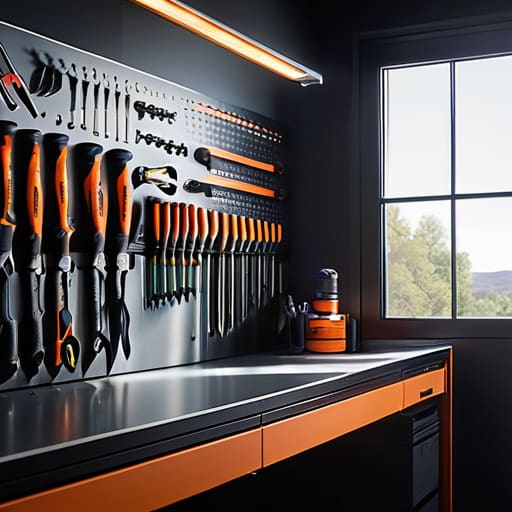
If pegboards are the classic foundation, then moving into custom wall-mounted systems is like upgrading from a monochrome display to a high-definition holographic interface. To truly master your environment, you need to think vertically. By installing dedicated rails or modular magnetic strips, you aren’t just storing items; you are architecting a command center. This approach to wall mounted tool organizers allows you to curate your most essential gear right at eye level, ensuring that your transition from ideation to execution is as smooth as a seamless VR render.
For those navigating the constraints of a compact studio, I highly recommend looking into small workshop space optimization through recessed shelving or slim-profile tool racks. It’s all about maximizing your cubic volume without cluttering your visual field. When you treat your walls as a dynamic canvas for your hardware, you transform a mere storage area into a high-performance launchpad. Don’t just tuck your wrenches away in a dark drawer; display them with intention, turning your workspace into a symphony of functional art that’s ready for whatever cosmic project you tackle next.
Engineering Your Tactical Arsenal: 5 Pro-Tips for a High-Velocity Workspace
- Implement a “Zone-Based Architecture” to minimize your physical latency; group your tools by mission type—like a dedicated soldering station or a precision assembly zone—so you aren’t trekking across the shop every time you need a specific component.
- Embrace the power of Shadow Boarding to create a visual HUD for your workbench; by tracing the silhouette of every wrench and driver, you’ll instantly spot a missing tool, preventing that frustrating “system error” when you’re mid-build.
- Deploy Modular Mobile Units to turn your workshop into a dynamic, shifting landscape; using rolling tool carts allows you to bring your entire tech stack directly to the project site, making your workspace as fluid and adaptable as a VR environment.
- Utilize Transparent Storage Modules for your small-scale hardware; ditch the opaque bins and opt for clear, stackable containers so you can see your inventory of screws, resistors, and fasteners at a glance, without having to run a manual search through your digital-physical archives.
- Integrate Smart Lighting to illuminate your creative nexus; don’t just settle for standard overheads—layer in task lighting that mimics natural spectrums to reduce eye strain and ensure your fine-tuned calibrations are nothing short of perfection.
Engineering Your Creative Command Center
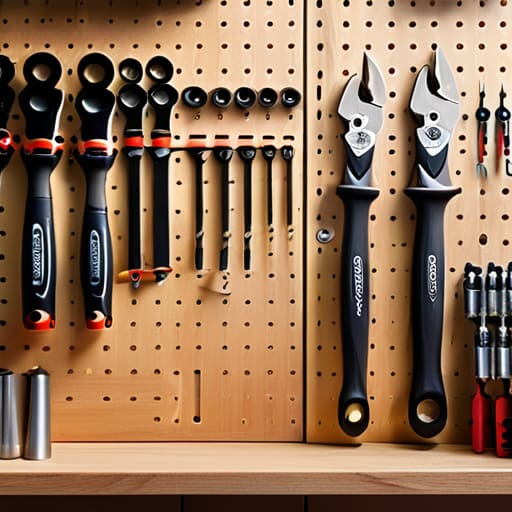
As we’ve navigated through the digital and physical blueprints of a high-functioning workspace, it’s clear that organization isn’t just about tidying up; it’s about optimizing your cognitive bandwidth. By mastering the vertical potential of pegboards and integrating smart, wall-mounted systems, you aren’t just storing wrenches and screwdrivers—you are architecting a streamlined interface between your intent and your execution. Remember, every tool should have a designated docking station, ensuring that your workflow remains a seamless stream of uninterrupted creation rather than a frantic search through a cluttered void.
Looking toward the horizon, I want you to view your workshop not merely as a room filled with hardware, but as a launchpad for the next great leap in your personal evolution. The way we structure our physical environments dictates the boundaries of our imagination; a chaotic space invites chaotic thoughts, but a curated, intentional sanctuary invites limitless innovation. So, go ahead and recalibrate your surroundings. Treat your workbench like a high-tech cockpit designed for discovery, and prepare yourself to pilot your ideas into the bright, shimmering future that awaits just beyond the next project.