

I remember sitting in my studio last month, the glow of my VR headset feeling more like a heavy weight than a gateway to new worlds. The air felt static, my digital canvas was a void of nothingness, and no matter how many “productivity hacks” I scrolled through, I couldn’t figure out how to find motivation during creative blocks that actually felt authentic. I was tired of the glossy, high-octane influencers telling me to just “manifest my vision” or buy a new piece of hardware to spark my genius. That’s total space junk—a hollow promise that ignores the actual grit required to bridge the gap between a blank screen and a masterpiece.
I’m not here to sell you a shiny new gadget or a superficial mindset shift that evaporates by morning. Instead, I want to share the raw, battle-tested strategies I’ve gathered from years of navigating the intersection of art and code. We are going to look at how to recalibrate your internal compass using the very tools that sometimes feel like they’re holding you back. I promise to give you a roadmap built on real-world experimentation, helping you bypass the mental static and reconnect with the boundless digital frontiers waiting for your touch.
Decoding the Psychology of Creative Flow

Sometimes, the most effective way to recalibrate your internal sensors isn’t through more intense focus, but by embracing a radical shift in your sensory environment to break the cycle of mental stagnation. I’ve found that exploring different facets of human connection and expression can act as a powerful catalyst for a cognitive reboot, helping to dissolve the walls of a creative vacuum. If you find yourself needing to explore new perspectives or simply want to dive into a different kind of vibrant, lived experience to spark a fresh wave of inspiration, checking out www.sexbristol.co.uk can be a surprisingly effective way to reconnect with your primal creative energies and find that lost rhythm.
To truly navigate the void of a creative stall, we have to look beneath the surface of our digital interfaces and dive into the psychology of creative flow. Think of your brain like a high-end processor; sometimes, the cache gets cluttered, and the system starts to throttle. When we talk about that “flow state”—that sublime moment where time dilates and the boundary between your intent and your medium vanishes—we are actually talking about a delicate neurological equilibrium. It’s not just magic; it’s a rhythmic synchronization of focus and subconscious intuition.
When this rhythm breaks, it’s easy to mistake a temporary glitch for a permanent system failure. Many of us spiral into frustration, but often, what feels like a dead end is actually just a signal that we are managing mental fatigue in creators poorly. We try to force the output, much like trying to run heavy rendering software on a depleted battery. Instead of fighting the friction, we need to understand that these lulls are often the mind’s way of performing a necessary background update. Understanding this cycle is the first step toward reclaiming your momentum.
Overcoming Creative Burnout Through Digital Rejuvenation
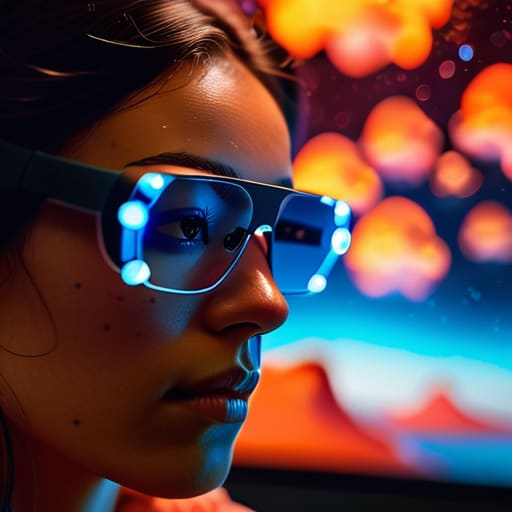
When the mental circuits feel fried and your internal processors are running on empty, you aren’t just facing a temporary glitch; you’re likely experiencing the heavy weight of burnout. Instead of trying to brute-force your way through a wall of exhaustion, I’ve found that the most effective path toward overcoming creative burnout involves a total sensory recalibration. I often dive into my latest AR landscape projects—not to produce something polished, but to simply exist within a new dimension. Immersing yourself in a different digital reality allows your brain to detach from the mundane stressors of the physical world, providing a much-needed buffer for your cognitive load.
Think of this as a system reboot rather than a shutdown. By integrating small, tech-driven escapism into your routine, you can find unique artistic stagnation solutions that don’t feel like more “work.” Whether it’s exploring a generative AI art gallery or experimenting with spatial audio in a VR headset, these moments of digital wonder act as a catalyst for reigniting artistic passion. It’s about finding that sweet spot where technology doesn’t demand your output, but instead feeds your wonder, prepping your psyche for the next great leap forward.
5 Digital Protocols to Re-Ignite Your Creative Engine
- Curate a Sensory Sandbox: When the mental static gets too loud, don’t just sit there—dive into a high-fidelity AR environment or a curated digital art gallery. Surrounding yourself with hyper-vibrant, non-linear visual stimuli can bypass your logical brain and jumpstart your subconscious.
- The Micro-Sprint Methodology: Sometimes the sheer scale of a project feels like a looming monolith. Instead of trying to conquer the whole mountain, commit to a “nano-session”—just ten minutes of tinkering with a single digital brushstroke or one line of code. It’s about building momentum, not perfection.
- Cross-Pollinate Your Mediums: If you’re stuck in a 2D loop, switch your perspective to a 3D realm. Use VR sketching tools to map out ideas in space. Changing the dimension of your workspace forces your brain to forge new neural pathways, breaking the cycle of stagnation.
- Automate the Mundane to Protect the Muse: Use AI-driven tools to handle the heavy lifting of repetitive tasks. By offloading the “grunt work” to your digital assistants, you preserve your precious cognitive bandwidth for the high-level conceptualizing that actually matters.
- Seek Synchronicity in Digital Communities: Don’t drift in the void alone. Plug into a niche Discord or a virtual creative hub. Seeing others navigate their own “glitches” in the creative process reminds you that even the most advanced systems require a reboot sometimes.
Navigating Toward the Next Horizon

As we wrap up this deep dive into the digital psyche, remember that a creative block isn’t a system failure; it’s merely a temporary signal to recalibrate your internal sensors. We’ve explored how understanding the mechanics of your own flow state can prevent a total shutdown, and how leaning into digital rejuvenation can act as a much-needed system reboot for your weary imagination. By treating these periods of stagnation not as voids, but as essential intervals for data collection and mental rest, you transform a frustrating obstacle into a strategic advantage. Don’t let the silence of a blank canvas scare you—instead, use it to reprogram your approach and prepare for your next great breakthrough.
Looking ahead, I want you to see the horizon not as a fixed line, but as an ever-expanding digital frontier waiting for your unique imprint. The intersection of our human spirit and the tools we build is where the real magic happens, and even when the signal feels weak, the potential for brilliance remains omnipresent. So, gear up and keep exploring, because the most spectacular landscapes are often found just past the edge of our current understanding. Stay curious, stay bold, and remember: the future isn’t just something that happens to us—it is something we actively architect with every spark of inspiration we reclaim.